

Bar Stool – Counter Height
$5.00
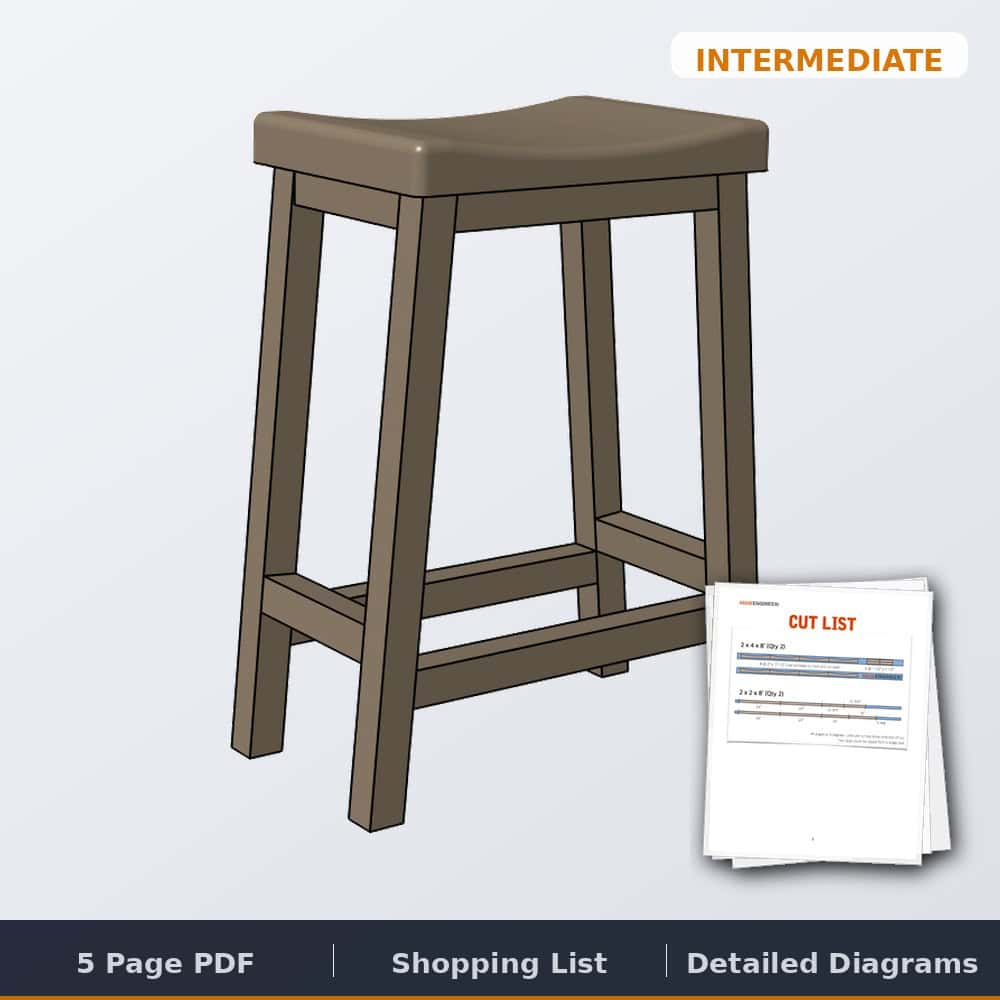
Printable plans for a 26″ counter height bar stool with a curved saddle seat, built from two 2x4s and two 2x2s. Includes a printable seat template, a cut list with every 5 degree angle, 4 illustrated steps, and a tools and materials list.
✓ Instant download · Personal use license · Secure checkout via Stripe
Description
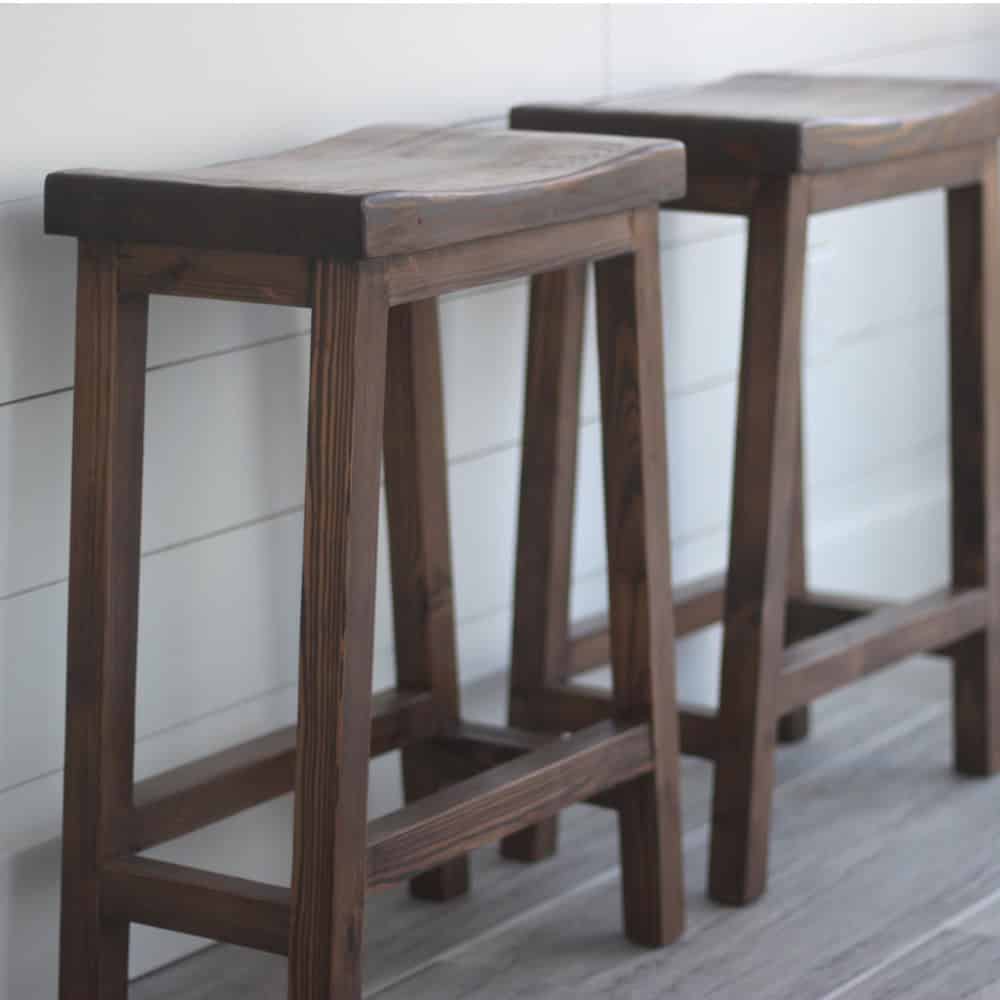
Counter height bar stool plans with a curved seat, built from 2x4s
We were planning a small counter height spot in the house we were renovating, and I wanted stools a little nicer than a flat-topped box. I thought a curved seat needed tools I didn’t own, until I realized I could cut the curve into each seat board before gluing them up. So the seat is eight 2×4 strips, each cut to a printed template with a jigsaw, glued into a block, then sanded smooth into a saddle shape. The base is 2×2 legs at a 5 degree splay, pocket-screwed together. The whole stool comes out of two 2x4s and two 2x2s for about $10.
Watch the build
What you get
- Printable PDF plan, instant download
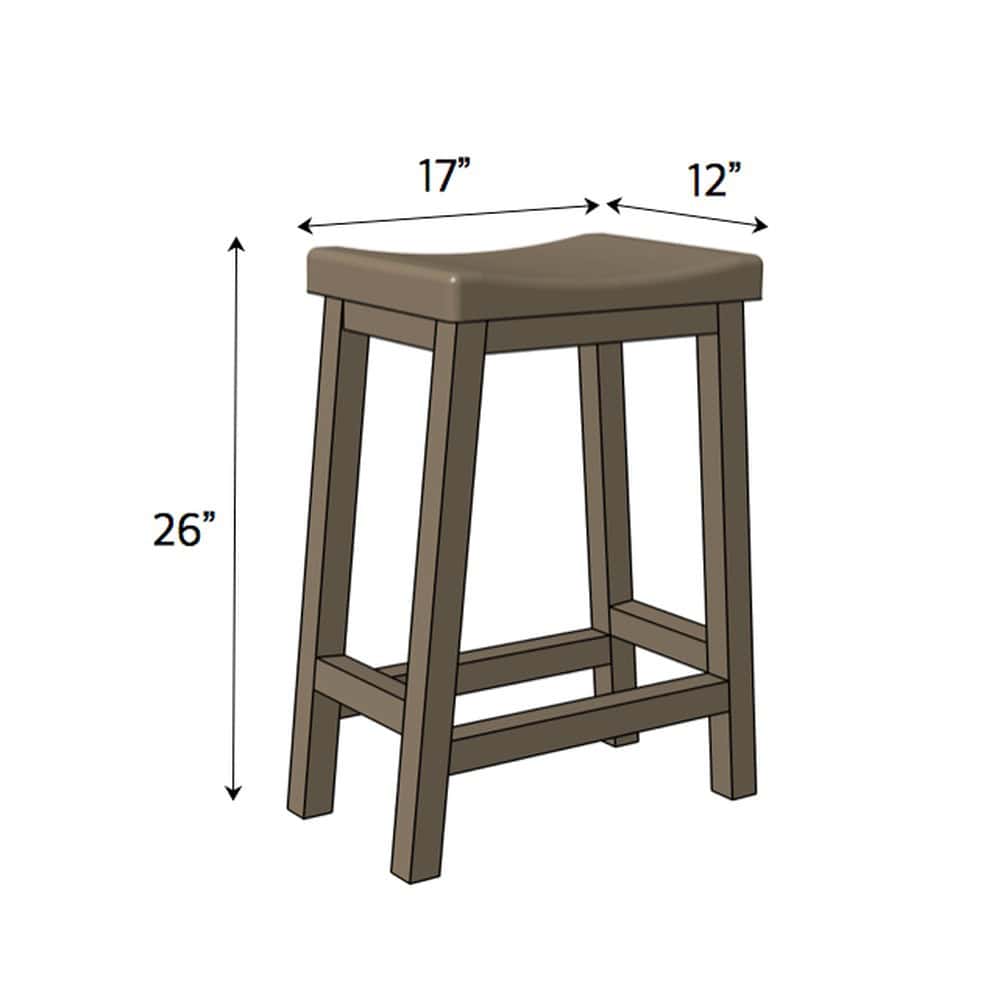
- Overall dimensions
- Cut list with every 5 degree angle marked
- Printable seat template for marking the curve on each board
- 4 illustrated steps: seat, front and back frames, base, final assembly
- Tools and materials list
Specs
- Overall size: 26″ tall x 17″ wide x 12″ deep (counter height)
- Seat: curved, glued up from eight 2×4 strips and trimmed to 17″
- Build time: 1 weekend
- Skill level: Intermediate
- Estimated cost: about $10 (estimate from the plan)
Lumber you’ll need
- 2 boards, 2x4x8′ (eight seat strips and four short base pieces)
- 2 boards, 2x2x8′ (legs and rails; you can rip both from a single 2×4)
Hardware
- 2-1/2″ pocket screws
- 2-1/2″ wood screws
- Wood glue
Tools you’ll need
- Pocket hole jig
- Drill/driver
- Miter saw for the 5 degree cuts
- Jigsaw or band saw for the seat curve
- Belt sander
- Router (optional, for easing the seat edges)
- Clamps
- Tape measure, pencil and safety equipment
Common questions
How do you get a curved seat without special tools? Trace the template onto each of the eight seat boards and cut the curve with a jigsaw or band saw before glue-up. Clamp the strips together, let the glue dry, trim the sides to 17″, then sand the top smooth with a belt sander.
Do I need a router? No. It’s optional. You can ease or round over the seat edges with a sander instead.
How is the base attached to the seat? With 2-1/2″ wood screws driven up through the base rails into the seat.
Want to see it first? The full build is on the blog: counter height bar stool. Need a lower, simpler seat for the shop? Check out my simple stool plans.
Quick answers
1 review for Bar Stool – Counter Height